

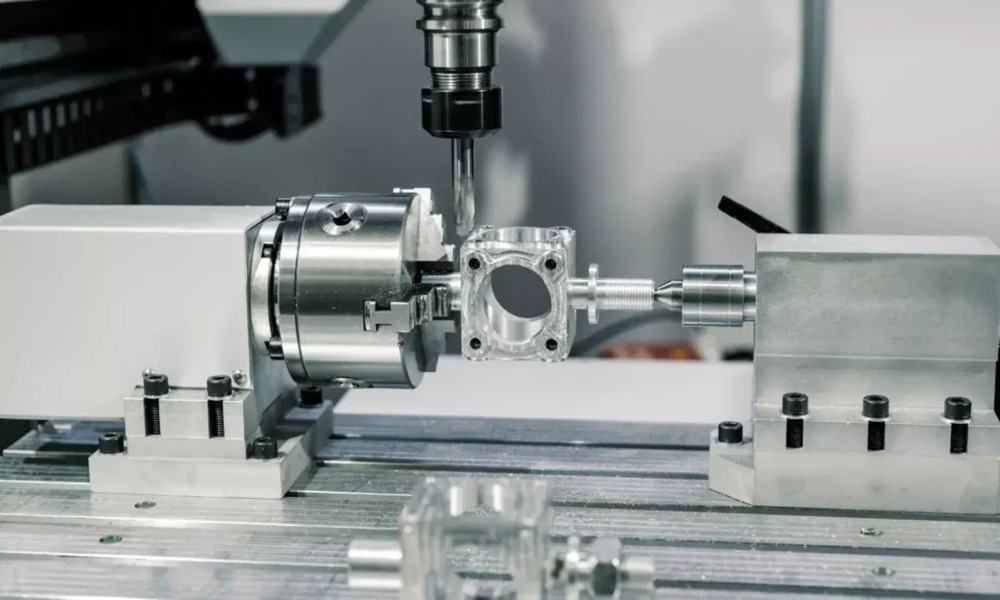
Reliable component life depends on strong protection against stress and repeated use. Precision machining enables exact shapes that meet strict production needs. Coating methods improve resistance to damage while helping parts stay stable under demanding conditions. This approach lowers repair frequency and supports steady output quality across operations, strengthened further by Vietnam Precision Machining expertise.
Wear Resistance Improvement
Continuous movement causes gradual damage that reduces part strength over time. Coatings create a harder outer layer that shields the base from friction effects. This helps maintain dimensional accuracy even after extended operation periods. Strong wear control supports reliable function without frequent replacements.
Thermal Stability Control
Heat exposure can weaken parts and lead to structural changes during operation. Coatings help manage temperature effects by reducing heat transfer into the base material. This protection keeps parts stable under varying thermal conditions.
Corrosion Protection Systems
Exposure to moisture and reactive elements can damage untreated components quickly. Protective coatings act as a barrier that limits chemical reactions on the surface. This helps preserve structural integrity even in challenging surroundings. Strong resistance to corrosion supports longer usage without visible degradation, reinforcing reliability in Vietnam Precision Machining.
Coating Application Techniques
Different coating methods influence strength and durability across various usage conditions.
- Thermal spray process forms dense layers that improve hardness under stress conditions
- Vapor deposition method builds thin films that maintain precise part dimensions
- Electroplating approach creates smooth coatings that resist friction effectively
- Chemical coating technique ensures even coverage across complex component shapes
- Laser-assisted coating improves bonding strength while reducing internal stress
Performance Testing Methods
Regular testing ensures coatings meet required durability standards before actual use. Inspection methods help identify weak spots that may reduce strength over time. Surface checks confirm a consistent finish that supports smooth operation. Reliable evaluation improves confidence in long-term performance.
Improving durability through coating methods requires proper planning and careful process control. Each stage, from preparation to testing, supports stronger protection and better performance. Balanced coating thickness maintains shape accuracy while preventing damage. Reliable techniques reduce wear and extend usability across different conditions. Consistent evaluation ensures dependable results and supports long-term efficiency in production systems.
FAQ
What advantages do coating methods provide for long-term component durability?
They reduce damage, improve strength, maintain accuracy, and extend usable component life.
Why is thermal stability important when applying coatings to engineered parts?
It prevents distortion, maintains strength, and supports consistent performance during temperature changes.
How do application methods impact coating strength in repeated use situations?
Different methods improve bonding, reduce wear, and ensure stable protective layer formation.
