

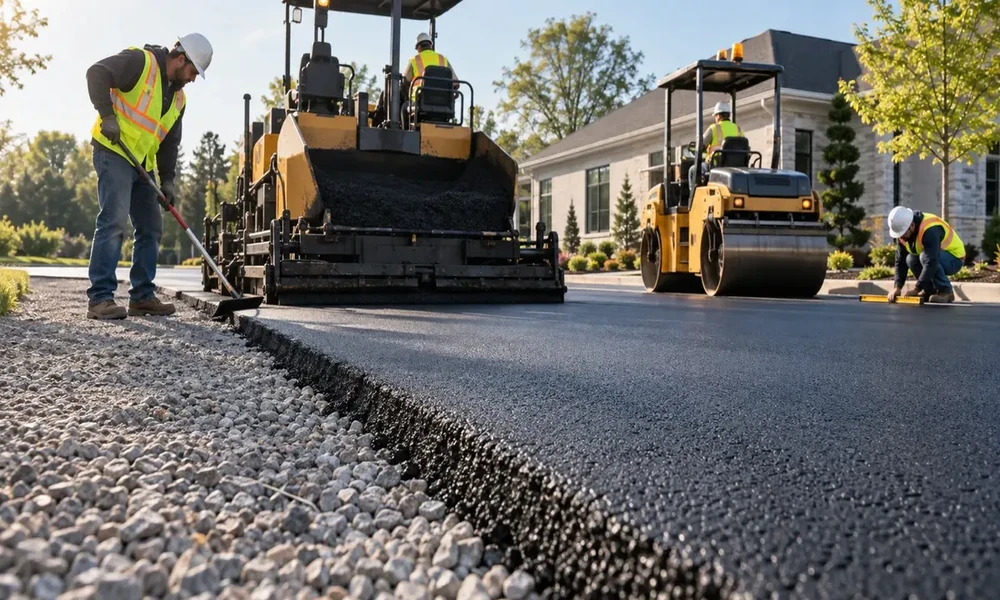
Most residential paving jobs take a day or two of actual work, though the surface isn’t fully ready for normal use until well after the crew leaves. Fresh asphalt stays soft for weeks and keeps hardening for months. Property owners who type american paving paving companies knoxville tn into a search bar are often trying to work out the same thing, which is how long the whole process takes and when they can park on it again. The answer depends on the season, the size of the job and how carefully the new surface is treated early on.
Picking the Right Time of Year
Asphalt is laid hot, at temperatures close to 300 degrees, and it needs to stay warm long enough to be spread and rolled tight. Cold ground pulls that heat out fast. Pave in near freezing weather and the mix can stiffen before it’s properly compacted.
So most paving in East Tennessee happens between late spring and early autumn. Summer is the busiest stretch, and good contractors book up. Getting an estimate in late winter or early spring makes it easier to land a date that suits the property owner rather than whatever’s left open.
For a typical home driveway, all of this often fits into one long day. Bigger lots and jobs with heavy base repair can stretch across several days. Results for American Paving paving companies Knoxville TN and similar searches will list contractors who generally follow this same order, even if their equipment and crew sizes differ.
Why Fresh Asphalt Needs Gentle Treatment
New asphalt looks finished the moment the roller stops. Underneath, it’s still soft.
Most contractors ask owners to keep cars off for at least two or three days, longer during a heat wave. Even after that, the surface marks easily for a few weeks. Turning a steering wheel while the car is standing still can twist a scuff into the top layer. Motorcycle kickstands, trailer jacks and the legs of a ladder can all sink in on a hot afternoon. Heavy trucks are best kept off entirely for the first month or so if possible, and nobody should park right on the unsupported edges.
Some of this sounds fussy. A dent pressed into fresh asphalt in week one is still there years later, though.
A Typical Project Timeline
Every job is a little different, so treat this as a rough sketch rather than a schedule.
- Several weeks before Estimate visit, written quote and booking a date
- A few days before Cars moved, sprinkler heads and buried lines marked, neighbors told about trucks
- Paving day Old surface removed, base graded and compacted, new asphalt laid and rolled
- First two or three days No vehicles on the surface
- First month Light use only, with no heavy trucks or sharp turns in place
- Six to twelve months First sealcoat once the asphalt has cured
When It’s Really Done
The crew packs up and the driveway looks brand new by evening. It’s tempting to treat that as the finish line. In practice, paving day is closer to the halfway mark. The weeks of soft asphalt that follow, and the year of slow curing after that, do as much to decide how the surface holds up as anything that happened while the trucks were on site.
