Customer Journey Mapping Explained: A Complete Guide to Improving Customer Experience

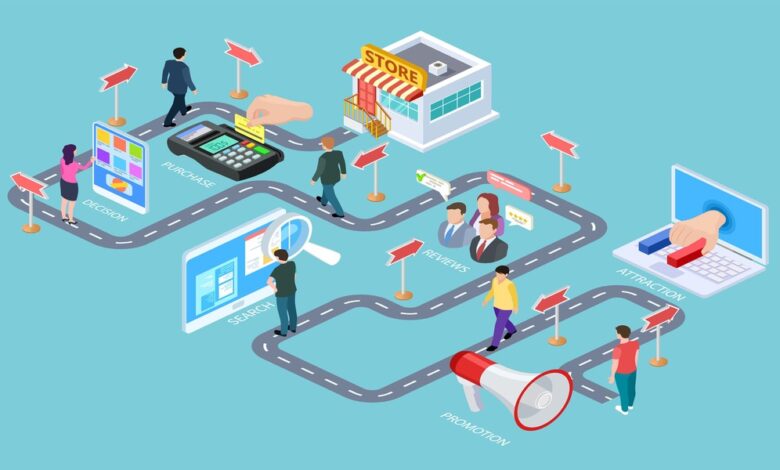
Customer journey mapping is a strategic marketing process that visually illustrates how customers interact with a brand across multiple touchpoints, from initial awareness to post-purchase engagement. By tracking each step of the customer experience journey, businesses gain a clear understanding of how prospects move between online and offline channels before making a buying decision.
Journey mapping serves as a blueprint for improving customer experience, identifying friction points, and enhancing satisfaction. When companies map the customer journey effectively, they can pinpoint obstacles, motivations, and behavioral patterns that influence purchasing decisions. The ultimate goal is to create a seamless and engaging path that encourages conversions while strengthening long-term loyalty.
Understanding Customer Journey Mapping and Customer Touchpoints
Customer touchpoints are the individual interactions a person has with a brand, whether through a website visit, social media engagement, in-store experience, email communication, or customer support conversation. On their own, these interactions provide limited insight. However, when connected within a customer journey map, they reveal trends, emotional shifts, and behavioral patterns that shape the overall experience.
A comprehensive customer journey map provides a bird’s-eye view of the entire lifecycle, from the first point of contact through ongoing brand engagement. By analyzing touchpoints collectively rather than in isolation, businesses can detect recurring drop-off points, identify high-performing interactions, and adjust strategies to guide customers more smoothly toward conversion and retention.
Why Customer Journey Mapping Is Important for Business Growth
Customer journey mapping plays a critical role in improving customer experience and increasing profitability. When organizations design their marketing and communication strategies around real customer behavior, they reduce guesswork and deliver more relevant messaging. This approach enhances engagement, encourages repeat business, and supports organic growth through positive word-of-mouth.
Without a clear map of the customer experience journey, companies risk relying on generalized marketing tactics that fail to resonate in today’s data-driven digital environment. Journey mapping uncovers customer frustrations, hesitations, expectations, and aspirations. These insights allow businesses to proactively remove obstacles and strengthen trust, reducing churn and improving long-term customer retention.
Identifying Pain Points and Reducing Customer Churn
Acquiring new customers requires significant investment in advertising, content marketing, customer service, and brand awareness campaigns. When customers abandon their journey before completing a purchase or switch to competitors, those investments are diminished. Customer journey mapping helps organizations understand exactly where and why disengagement occurs.
By analyzing emotional responses and behavioral patterns at each touchpoint, businesses can identify friction that disrupts the buying process. Addressing these pain points improves conversion rates and strengthens loyalty. In competitive markets, optimizing the customer experience journey often becomes the key differentiator that determines whether prospects stay engaged or move elsewhere.
How to Create an Effective Customer Journey Map
Creating a customer journey map begins with understanding that different customer segments experience a brand in different ways. Market segmentation and detailed customer profiling are essential steps before mapping begins. Each demographic group may interact with unique touchpoints, respond to different messaging, and demonstrate varying levels of engagement.
Once customer profiles are defined, businesses can document touchpoints across time, tracking emotions, thoughts, and actions associated with each interaction. Patterns emerge when data is organized systematically, allowing teams to measure customer experience metrics and evaluate trends. The emphasis should remain on average behavioral patterns rather than isolated outliers, ensuring strategic decisions are based on reliable insights.
Current State Customer Journey Mapping
Current state customer journey mapping focuses on documenting how customers interact with a brand right now. This practical approach tracks real-time touchpoints, emotions, and behaviors as they naturally occur. By visualizing the existing journey, companies can identify strengths and weaknesses in their current processes without speculation.
Although more advanced mapping techniques such as future state modeling and day-in-the-life analysis can provide additional insights, current state mapping often delivers immediate and actionable value. It provides clarity on what customers are experiencing today and establishes a baseline for improvement initiatives.
Aligning Teams for Customer Journey Success
Successful customer journey mapping requires collaboration across departments, including marketing, sales, customer service, and human resources. When teams understand shared objectives and work from the same data, they can create consistent and cohesive customer experiences. Organizational alignment ensures that improvements at one touchpoint are reinforced across the entire journey.
Technology also plays a crucial role in managing and analyzing large volumes of touchpoint data. As customer interactions expand across digital platforms, businesses need structured systems to track emotions, actions, and outcomes. A coordinated effort supported by the right tools enables companies to transform complex data into actionable strategies.
B2B Customer Journey Mapping Considerations
Business-to-business customer journey mapping introduces additional complexity compared to consumer markets. B2B buying cycles are typically longer, involve multiple decision-makers, and require more detailed communication. Understanding the influence of stakeholders such as managers, technical experts, and executives is essential when mapping the B2B customer experience journey.
Because products and services in B2B markets can appear similar across competitors, the quality of communication and customer experience often becomes the primary differentiator. Journey mapping helps businesses tailor messaging to various influencers within a buying group, ensuring each stakeholder’s concerns are addressed. By accounting for extended timelines and committee-based decisions, companies can design more strategic engagement plans that increase conversion rates.
Leveraging Customer Journey Mapping for Strategic Planning
Customer journey mapping is more than a marketing exercise; it is a strategic planning tool that informs executive decision-making. By analyzing trends across customer segments, organizations can allocate resources toward high-performing experiences and adjust offerings to better align with market demand.
When used effectively, journey mapping becomes a continuous improvement framework rather than a one-time project. Ongoing measurement of customer experience metrics allows businesses to adapt to evolving customer expectations and competitive pressures. In a digital landscape where customer behavior changes rapidly, a well-maintained customer journey map provides clarity, direction, and sustainable growth.